
They help modulating the synthesis of different cannabinoids inside the plant and can be manipulated to create new strains with the desired cannabinoid ratio (high) and flavor

Taming THC: potential cannabis synergy and phytocannabinoid-terpenoid entourage effects
Ethan B Russo
Abstract
Tetrahydrocannabinol (THC) has been the primary focus of cannabis research since 1964, when Raphael Mechoulam isolated and synthesized it. More recently, the synergistic contributions of cannabidiol to cannabis pharmacology and analgesia have been scientifically demonstrated. Other phytocannabinoids, including tetrahydrocannabivarin, cannabigerol and cannabichromene, exert additional effects of therapeutic interest. Innovative conventional plant breeding has yielded cannabis chemotypes expressing high titres of each component for future study. This review will explore another echelon of phytotherapeutic agents, the cannabis terpenoids: limonene, myrcene, α-pinene, linalool, β-caryophyllene, caryophyllene oxide, nerolidol and phytol. Terpenoids share a precursor with phytocannabinoids, and are all flavour and fragrance components common to human diets that have been designated Generally Recognized as Safe by the US Food and Drug Administration and other regulatory agencies. Terpenoids are quite potent, and affect animal and even human behaviour when inhaled from ambient air at serum levels in the single digits ng·mL−1. They display unique therapeutic effects that may contribute meaningfully to the entourage effects of cannabis-based medicinal extracts. Particular focus will be placed on phytocannabinoid-terpenoid interactions that could produce synergy with respect to treatment of pain, inflammation, depression, anxiety, addiction, epilepsy, cancer, fungal and bacterial infections (including methicillin-resistant Staphylococcus aureus). Scientific evidence is presented for non-cannabinoid plant components as putative antidotes to intoxicating effects of THC that could increase its therapeutic index. Methods for investigating entourage effects in future experiments will be proposed. Phytocannabinoid-terpenoid synergy, if proven, increases the likelihood that an extensive pipeline of new therapeutic products is possible from this venerable plant.
Check the PDF Link
Since i'm not an expert i took the liberty of copying this nice article regarding the above study from someone who is, read on!
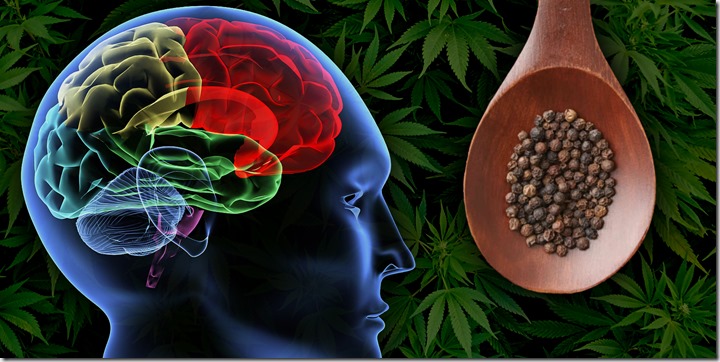
While working at the Victoria Cannabis Buyers Club I was able to teach some of the members about Black Pepper. While benefiting from the medicinal effects of THC, these patients suffered from bouts with anxiety while medicating. Most patients who have tried this simply took a few sniffs of the black pepper to receive an almost immediate effect. Others have reported that after chewing on pepper corns they felt relief within an hour, but that may be a delay most would seek to avoid. So how does this work? The Aug. 2011 British Journal of Pharmacology: Cannabinoids in Biology and Medicine, Part 1 includes numerous articles exploring the nature of the cannabis plants’ chemical dynamism. In the article “Taming THC,” scientists report having discovered more than a hundred terpenes that “may contribute meaningfully to the entourage effects of cannabis-based medicinal extracts.” Terpenes create the many scents of cannabis and are shared among the plant kingdom. Scientists explored how these aromatic oils synergize and mitigate the active cannabinoids contributing to an entourage effect.
Cannabis in known to produce a wide variety of effects from rendering a individual wide-awake to sending them into a sound sleep. Growers have been tailoring their heirloom heritage varieties of cannabis to uniformly exhibit certain cannabinoid/terpene profiles to produce particular effects. CBD is quickly becoming an essential component to combat the unwelcome effects of using THC rich cannabis, such as anxiety. Another option may be to introduce terpenes from other plant sources to mitigate the effects.
Ed Rosenthal, author of many books on cannabis, relates that the myrcene in mangos can increase the quality of low potency cannabis when eaten one hour before medicating. Anecdotal evidence suggests that the terpene alpha-pinene is alerting, limonene is “sunshine-y,” and beta-myrcene is sedating. As the names suggest, pinene is abundant in pine needles and limonene in lemons. Traditional responses to cannabis induced anxiety include pinene-rich black pepper, limonene-rich citrus, and calamus root high in myrcene. Myrcene is also found in hops (Humulus), the only other member of the Cannabaceae plant family. “Cannabis terpenoids and flavonoids may also increase cerebral blood flow, enhance cortical activity, kill respiratory pathogens, and provide anti-inflammatory activity.”(source)

(image: GreenHouse Seeds)
Scientists have discovered that beta-caryophyllene (BCP), which is another terpene that contributes to the aroma and flavour, also found in other herbs, spices, and food plants, activates the CB2 receptor and acts as a non-psychoactive anti-inflammatory. Because it binds to a cannabinoid receptor [...] and since it is an FDA approved food additive and ingested daily with food, it is the first known dietary cannabinoid.(source) Leading the way on terpene identification is Green House Seed Company in Holland who have performed spectral analysis of each of their strains and developed a flavour wheel identifying 16 different terpenes to help individuals decide on their strain of choice.

(image: GreenHouse Seeds)
Cannabis Science Inc. is exploring the possibility that certain terpenes act as building blocks for the production of cannabinoids, with the hope that this will open up to cultivators the opportunity to manipulate cannabinoids to desired ratios. they are exploring how terpenes act synergistically with other terpenes to either catalyze or inhibit the formation of other compounds within a plant.
Up until now, drug companies have been focusing on single synthetic compounds that can be patented and brought to market. In light of these discoveries, scientists isolating cannabinoids into synthetic compounds have to consider the terpene interaction as another variable potentially responsible for the plants therapeutic effects. Cannabis grown with care and attention to the curing process will contain more terpenes. Many terpenes are FDA approved and therefore easy to obtain for testing.
Source
Ethan B Russo
Abstract
Tetrahydrocannabinol (THC) has been the primary focus of cannabis research since 1964, when Raphael Mechoulam isolated and synthesized it. More recently, the synergistic contributions of cannabidiol to cannabis pharmacology and analgesia have been scientifically demonstrated. Other phytocannabinoids, including tetrahydrocannabivarin, cannabigerol and cannabichromene, exert additional effects of therapeutic interest. Innovative conventional plant breeding has yielded cannabis chemotypes expressing high titres of each component for future study. This review will explore another echelon of phytotherapeutic agents, the cannabis terpenoids: limonene, myrcene, α-pinene, linalool, β-caryophyllene, caryophyllene oxide, nerolidol and phytol. Terpenoids share a precursor with phytocannabinoids, and are all flavour and fragrance components common to human diets that have been designated Generally Recognized as Safe by the US Food and Drug Administration and other regulatory agencies. Terpenoids are quite potent, and affect animal and even human behaviour when inhaled from ambient air at serum levels in the single digits ng·mL−1. They display unique therapeutic effects that may contribute meaningfully to the entourage effects of cannabis-based medicinal extracts. Particular focus will be placed on phytocannabinoid-terpenoid interactions that could produce synergy with respect to treatment of pain, inflammation, depression, anxiety, addiction, epilepsy, cancer, fungal and bacterial infections (including methicillin-resistant Staphylococcus aureus). Scientific evidence is presented for non-cannabinoid plant components as putative antidotes to intoxicating effects of THC that could increase its therapeutic index. Methods for investigating entourage effects in future experiments will be proposed. Phytocannabinoid-terpenoid synergy, if proven, increases the likelihood that an extensive pipeline of new therapeutic products is possible from this venerable plant.
Check the PDF Link
Since i'm not an expert i took the liberty of copying this nice article regarding the above study from someone who is, read on!
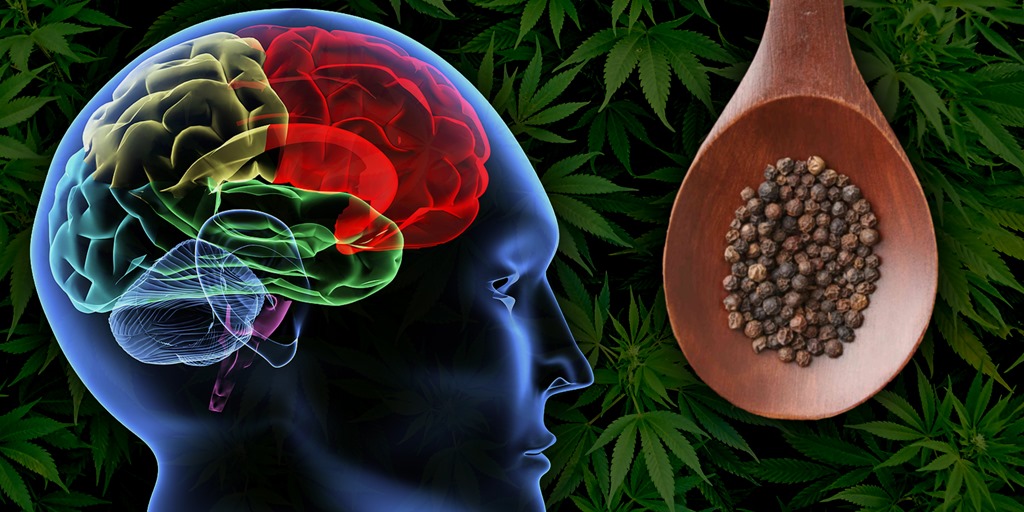
While working at the Victoria Cannabis Buyers Club I was able to teach some of the members about Black Pepper. While benefiting from the medicinal effects of THC, these patients suffered from bouts with anxiety while medicating. Most patients who have tried this simply took a few sniffs of the black pepper to receive an almost immediate effect. Others have reported that after chewing on pepper corns they felt relief within an hour, but that may be a delay most would seek to avoid. So how does this work? The Aug. 2011 British Journal of Pharmacology: Cannabinoids in Biology and Medicine, Part 1 includes numerous articles exploring the nature of the cannabis plants’ chemical dynamism. In the article “Taming THC,” scientists report having discovered more than a hundred terpenes that “may contribute meaningfully to the entourage effects of cannabis-based medicinal extracts.” Terpenes create the many scents of cannabis and are shared among the plant kingdom. Scientists explored how these aromatic oils synergize and mitigate the active cannabinoids contributing to an entourage effect.
Cannabis in known to produce a wide variety of effects from rendering a individual wide-awake to sending them into a sound sleep. Growers have been tailoring their heirloom heritage varieties of cannabis to uniformly exhibit certain cannabinoid/terpene profiles to produce particular effects. CBD is quickly becoming an essential component to combat the unwelcome effects of using THC rich cannabis, such as anxiety. Another option may be to introduce terpenes from other plant sources to mitigate the effects.
Ed Rosenthal, author of many books on cannabis, relates that the myrcene in mangos can increase the quality of low potency cannabis when eaten one hour before medicating. Anecdotal evidence suggests that the terpene alpha-pinene is alerting, limonene is “sunshine-y,” and beta-myrcene is sedating. As the names suggest, pinene is abundant in pine needles and limonene in lemons. Traditional responses to cannabis induced anxiety include pinene-rich black pepper, limonene-rich citrus, and calamus root high in myrcene. Myrcene is also found in hops (Humulus), the only other member of the Cannabaceae plant family. “Cannabis terpenoids and flavonoids may also increase cerebral blood flow, enhance cortical activity, kill respiratory pathogens, and provide anti-inflammatory activity.”(source)
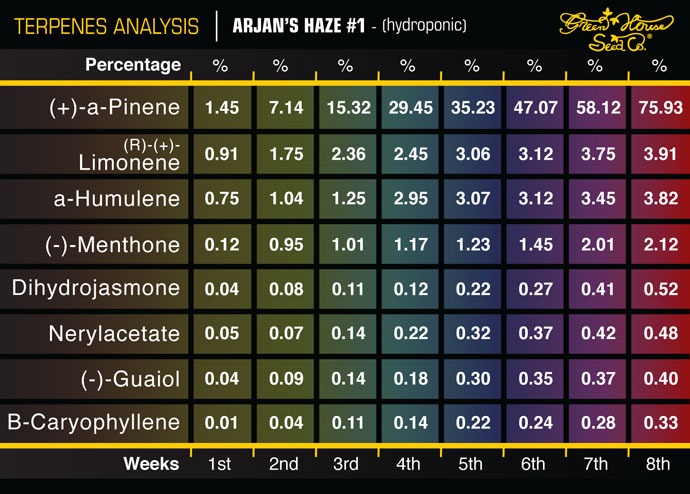
(image: GreenHouse Seeds)
Scientists have discovered that beta-caryophyllene (BCP), which is another terpene that contributes to the aroma and flavour, also found in other herbs, spices, and food plants, activates the CB2 receptor and acts as a non-psychoactive anti-inflammatory. Because it binds to a cannabinoid receptor [...] and since it is an FDA approved food additive and ingested daily with food, it is the first known dietary cannabinoid.(source) Leading the way on terpene identification is Green House Seed Company in Holland who have performed spectral analysis of each of their strains and developed a flavour wheel identifying 16 different terpenes to help individuals decide on their strain of choice.
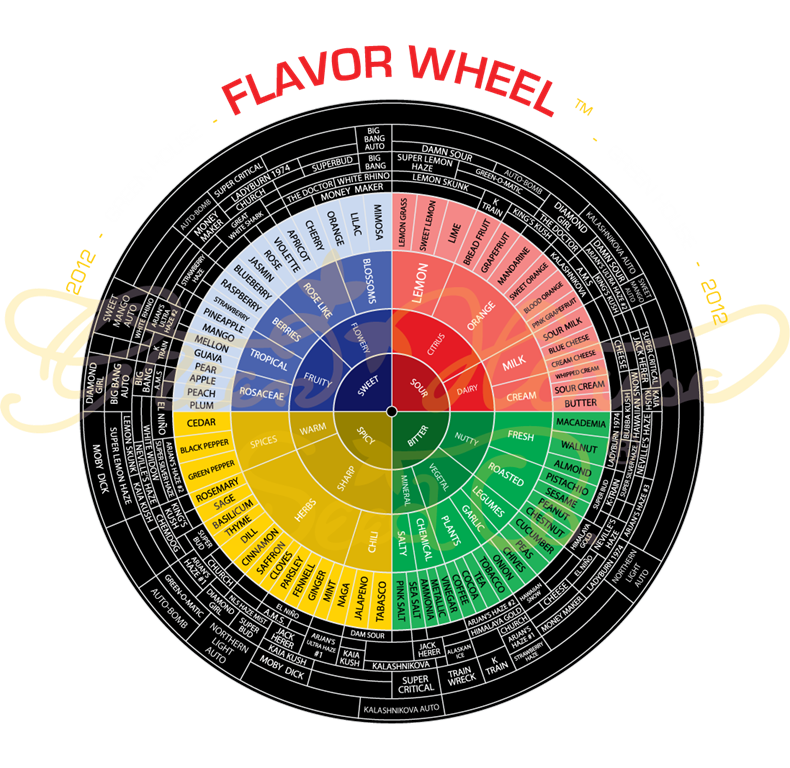
(image: GreenHouse Seeds)
Cannabis Science Inc. is exploring the possibility that certain terpenes act as building blocks for the production of cannabinoids, with the hope that this will open up to cultivators the opportunity to manipulate cannabinoids to desired ratios. they are exploring how terpenes act synergistically with other terpenes to either catalyze or inhibit the formation of other compounds within a plant.
Up until now, drug companies have been focusing on single synthetic compounds that can be patented and brought to market. In light of these discoveries, scientists isolating cannabinoids into synthetic compounds have to consider the terpene interaction as another variable potentially responsible for the plants therapeutic effects. Cannabis grown with care and attention to the curing process will contain more terpenes. Many terpenes are FDA approved and therefore easy to obtain for testing.
Source

Hi,
ReplyDeleteI hope all is well with you. Healthline just published an infographic detailing how marijuana affects the body. This is an interactive chart allowing the reader to pick the side effect they want to learn more about.
You can see the overview of the report here: http://www.healthline.com/health/addiction/marijuana/effects-on-body
Our users have found our guide very useful and I thought it would be a great resource for your page: http://entropyverse.blogspot.com/2014/08/taming-thc-potential-cannabis-synergy.html
I would appreciate it if you could review our request and consider adding this visual representation of the effects of marijuana to your site or sharing it on your social media feeds.
Please let me know if you have any questions.
All the best,
Maggie Danhakl • Assistant Marketing Manager
Healthline • The Power of Intelligent Health
660 Third Street, San Francisco, CA 94107
www.healthline.com | @Healthline | @HealthlineCorp
About Us: corp.healthline.com